HomeAboutProjectsPeople
PublicationsPartnersContact
White House exterior

Latest Post

Building at What Cost? Unpacking the Infrastructure Ambitions of America's AI Action Plan

Evan ThompsonUniversity of Oregon IF Lab9 min read

Introduction

“Winning the Race: America's AI Action Plan” is a 28-page White House document outlining the directives and goals the U.S. has set with respect to artificial intelligence (AI).

The document is organized around three pillars: (1) Accelerate AI Innovation, which covers how the federal government can create favorable conditions for private-sector-led innovation to “flourish,” (2) Build American AI Infrastructure, which addresses the physical and energy-related changes needed to achieve AI leadership, and (3) Lead in International AI Diplomacy and Security, which emphasizes how the U.S. must drive global adoption of its AI systems, hardware, and standards.

All three pillars carry an urgent tone, with their proposed measures even bordering on radical at times. A reasonable concern is whether these measures are feasible while maintaining our current institutions and societal structures.

This post focuses on Pillar 2: Building American AI Infrastructure. The measures proposed in this section include rolling back environmental initiatives established by the Biden administration, streamlining regulation and permitting for data centers, and overcoming the challenge of developing a vastly larger energy supply than currently exists.

Below, I examine how Pillar 2 may affect local communities and the environment. In light of the action plan's “Build, Baby, Build” ethos, I explicitly consider how this approach risks sidelining environmental justice and equity.

I also explore how semiconductor and data center investments may shift competitive dynamics among U.S. firms and their global rivals, as well as the implications for supply chain resilience and cybersecurity.

Finally, I consider how rapid AI infrastructure growth may create new job categories, and whether the pace of development will mitigate or exacerbate regional labor shortages.

Society

Pillar 2 of the AI Action Plan addresses the measures needed to build out “vastly greater energy generation than we have today.” The preface highlights the fact that the U.S.'s energy capacity growth has been stagnant since the 1970s, while other nations such as China have rapidly expanded their grids. According to the document, achieving AI leadership in the U.S. requires reversing this trend.

Some of the recommended policy actions appear aggressive, and given the “Build, Baby, Build” mantra espoused in the document, they may pose long-term risks to those with less flexibility in their budgets, as well as to sustainability efforts and the environment.

For communities, the major cost-benefit tradeoffs involve elevated utility costs and pollution, including air and noise pollution, water consumption, and e-waste, weighed against potential boosts to local GDP and job creation. Short-term jobs are generated in the categories of construction, engineering, and trades, while long-term positions include high-skill technical roles such as network engineering, facility management, and maintenance.

States with the highest concentrations of data centers are already seeing effects. Virginia, Illinois, and Ohio have experienced 13%, 15%, and 12% increases in average electric bill prices, respectively (Kimball & Cortés, 2025). Furthermore, subsidy programs in various states exempt data center projects from paying sales and use taxes on their largest expenses, often providing uncapped or unspecified limits for these exemptions (Tarczynska, 2025). These programs pose a significant concern for state budgets, as tax revenue that would otherwise be collected from these major projects is forgone.

The environmental costs of data centers stand to grow as the AI Action Plan goes into effect. Recommended policy actions in the document include: expediting environmental permitting by “streamlining or reducing regulations promulgated under the Clean Air Act, the Clean Water Act… and other relevant related laws”; making federal lands available for data center construction and associated power generation infrastructure; and exploring a “nationwide Clean Water Act Section 404 permit for data centers” covering sites consistent with the size of a “modern AI data center.” These actions are likely to generate significant public concern. Section 404 is a federal program that protects aquatic environments by regulating the discharge of fill materials into U.S. waters. Additionally, the use of federal land for development has long been contentious, pitting innovation against wildlife and environmental preservation. Even as permitting is expedited, Phase 2 of the National Environmental Policy Act (NEPA) requires agencies to analyze the collective environmental justice and climate impacts, and provide specific, measurable enforcement mechanisms, including pollution control, monitoring, and community benefits.

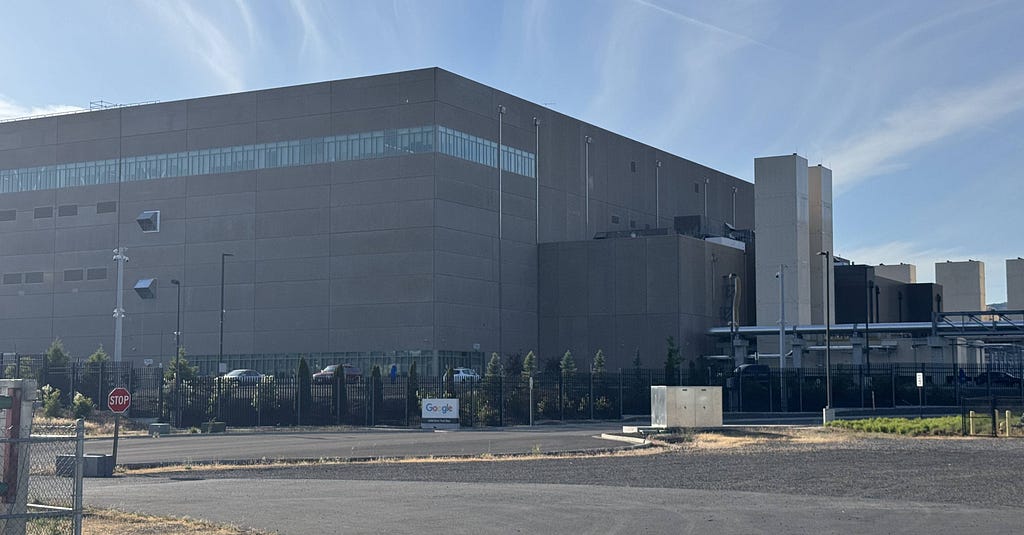
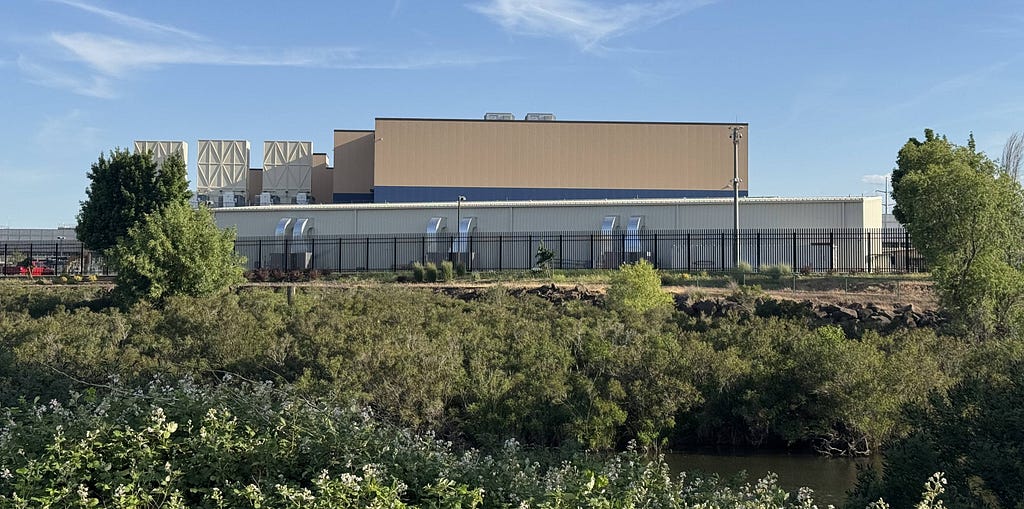
A case in point is The Dalles, Oregon. Google's operations currently account for roughly one-third of the city's total water use, granted to cool two data centers. Furthermore, proposed legislation would transfer 150 acres of the Mount Hood National Forest to the city and grant access to a low-flowing river that drains into the Columbia River. This river system serves as an essential cold-water refuge for threatened fish and wildlife migrating between Oregon's freshwater rivers and the Pacific Ocean. The Dalles has seen population growth of 12% since 2012, and plans exist to expand the reservoir to 3,000 acre-feet, which is 52% larger than a water master plan developed in 2006. In 2024, the city prepared another water master plan referencing an “unnamed industrial user” requiring about one million gallons of water per day. City records show that total water consumption in The Dalles in 2024 was approximately 1.3 billion gallons, with Google accounting for around 430 million. When Google moved into The Dalles, the land it purchased included a well with rights to pump water from an underground aquifer. Google reportedly transferred these rights to the city, but recent reports indicate that only a partial transfer occurred.

This example illustrates how large technology companies and their infrastructure needs can strain a region's freshwater supply. It raises concerns about long-term water availability in a basin prone to drought. As more data centers expand across Oregon (and the nation), the compounding effects will compete with local agriculture, ecosystems, and the needs of residents, creating tension where economic development is weighed against environmental justice and sustainability.

With current consumption levels of up to 500 megawatts (Stansbury et al., 2025), and approximately 2.1 million liters of water per day (Privette, 2024), the tension between environmental advocates and proponents of AI expansion is likely to intensify.

Organizations

The Action Plan states multiple times that to pave the quickest path to global AI leadership, the U.S. must establish criteria for identifying allies and rivals in the AI race. Those who fail to meet U.S. standards would be treated as rivals and denied access to the full AI technology stack, including hardware, models, software, and applications.

The subsection “Train a Skilled Workforce for AI Infrastructure” outlines policy actions to identify high-priority occupations and expand early career exposure programs in AI, providing students with hands-on research training and development opportunities. Other subsections, such as “Restore American Semiconductor Manufacturing,” highlight initiatives to remove policy requirements hindering certain manufacturing projects, thereby bolstering the overall industry.

Companies that develop and utilize leading-edge GPUs will gain an advantage in delivering frontier AI services and will raise the barrier to entry in this market.

Geographically, firms will compete for compute power across the national grid. Those who secure permits early and locate in lower-cost power regions can build out infrastructure more quickly, enabling more aggressive pricing strategies and faster scalability than rival firms.

To fully position the U.S. at the forefront of the AI race, changes will be needed in supply chains for chips, robotics, and drones. To maximize positive impact, these changes should focus on domestic manufacturing, streamlined regulation, and transparency with allies. Among these considerations, reliable power is a critical component. Regardless of whether energy becomes scarcer or more abundant, its handling, transfer, and consumption for factories, robotics, and data centers must be carefully considered.

Regarding cybersecurity and incident response, new directives will seek to reshape and standardize priorities along with guidelines that push for high-security AI data centers. This reflects the expectation that AI will increasingly be used to monitor and process some of the U.S. government's most sensitive data.

Organizational priorities will be reorganized around guidance from the National Institute of Standards and Technology (NIST), with AI systems structured to detect performance shifts and alert to malicious activities such as data poisoning and privacy attacks. This effort will be further supported by an AI Information Sharing and Analysis Center (led by the Department of Homeland Security) to promote the sharing of security threat information and intelligence across critical infrastructure sectors.

Future of Work

New jobs are anticipated in semiconductor manufacturing, energy and grid planning, and AI infrastructure and data centers, particularly for those skilled in trades and construction. Since the Energy Information Administration's (EIA) January 2026 outlook highlights the current demand surge for energy due to large computing facilities, a leading indicator for relevant trades hiring is the commercial computing load growth in the EIA Short-Term Energy Outlook. Another indicator to track is the JOLTS “Skilled-Trades Vacancy Rate” for construction and specialty trade contractors, which will be critical for determining whether hiring conditions are tight or favorable for electricians, line workers, and MEP (mechanical, electrical, and plumbing) technicians, potentially affecting project timelines.

To prepare the American workforce for these opportunities, the White House has detailed specific actions to develop frameworks and standards aligned with employer needs. The Department of Labor (DOL) and Department of Commerce (DOC) are directed to create a national initiative to define priority occupations and develop curricula for industry standards. Once established, employer-designed, industry-driven training programs at the state and local levels will be developed, with funding determined by programs' measured ability to deliver talent outcomes. Furthermore, early pipelines and pre-apprenticeships tied to local demand will be introduced in middle and high schools, with clear on-ramps to priority infrastructure jobs.

In addition to the structured paths aligning training programs with workforce demand, the Department of Energy (DOE) plans to expand lab-based training and development at the undergraduate and graduate levels by partnering with community and technical colleges. These partnerships will help target and prepare new entrants from the existing workforce and propel them into AI infrastructure roles.

Regional labor shortages will likely be concentrated in electrical and thermal trades as step-load interconnections — which connect large electrical loads such as data centers, hydrogen production plants, or industrial manufacturing facilities to the broader electrical grid — accelerate faster than apprenticeship programs can keep pace. Demand will also grow for industry experts who serve as analysts in AI-assurance practices. In terms of job displacement, construction jobs are apt to initially surge, as these data centers will take years to build. In the long run, however, the number of construction positions, along with local businesses that require significant energy usage, may decline as they struggle to keep up with the load and capacity changes that accompany data center buildout.

Conclusion

The University of Oregon's Intelligent Futures (IF) Lab is well positioned to consider these issues. Closely examining the White House's AI Action Plan lays the groundwork for potential research projects. Focusing on Pillar 2 reveals the measures that the U.S. is prepared to take to achieve global AI leadership. While many American jobs and opportunities in AI infrastructure will be created, the costs may affect the average American in the form of higher utility bills and a more polluted environment.

Given that the IF Lab is in the Pacific Northwest, and that many data centers are being built in Eastern Oregon, the lab has an opportunity to monitor the implications of large-scale data center rollouts locally. Indicators worth tracking include utility costs, population growth, environmental factors such as water and air quality, and economic factors surrounding employment and GDP. As the industry evolves, there will likely be opportunities to pursue projects and partnerships that advance our understanding of AI and its many applications, while considering the ethical implications for both current and future generations.


References

Bureau of Labor Statistics. (n.d.). Job Openings and Labor Turnover Survey (JOLTS). https://www.bls.gov/jlt/

Ehrlich, A. (2026, January 23). The Dalles' mayor called OPB's data center story inaccurate. Here are the facts. OPB. https://www.opb.org/article/2026/01/23/the-dalles-mayor-data-center-google/

Kimball, S., & Cortés, G. (2025, November 14). Electricity bills in states with the most data centers are surging. CNBC. https://www.cnbc.com/2025/11/14/...

The White House. (2025, July). America's AI Action Plan. https://www.whitehouse.gov/wp-content/uploads/2025/07/Americas-AI-Action-Plan.pdf

Tarczynska, K. (2025, April). Cloudy with a loss of spending control: How data centers are endangering state budgets. Good Jobs First. https://goodjobsfirst.org/...

U.S. Energy Information Administration. (2026, January 13). EIA forecasts strongest four-year growth in U.S. electricity demand since 2000, fueled by data centers [Press release]. https://www.eia.gov/pressroom/releases/press582.php

U.S. Environmental Protection Agency. (n.d.). Overview of Clean Water Act Section 404. Retrieved December 24, 2025, from https://www.epa.gov/cwa-404/overview-clean-water-act-section-404

Stansbury, M., Marchese, K., Hardin, K., & Amon, C. (2025, June 24). AI infrastructure gaps: Can US infrastructure keep up with the AI economy? Deloitte Insights. https://www.deloitte.com/...

Privette, A. P. (2024, October 11). AI's challenging waters. Civil & Environmental Engineering, University of Illinois Urbana–Champaign. https://cee.illinois.edu/news/AIs-Challenging-Waters


More from IF Lab

Originally published on Medium

Read on Medium